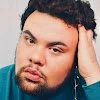
Emotional vs. physical reality: how resilient can a person learn to be?
I think part of what is so profoundly weird and unsettling is that on the inside I feel almost entirely like myself—my thoughts, my personality, my core identity remain intact. Yet the container carrying all of that feels vastly altered.
Ever since the strokes, there is a constant, quiet disconnect between who I am mentally and how my physical body actually feels and responds. At times, I feel somewhere between normal and broken, standing inside a familiar house where all the internal wiring has been unexpectedly rearranged overnight. I vividly remember what it was like to be fully fluent in the native language of my own body—moving through the world with complete independence, grace, and effortless ease. Now, even the simplest physical movement can feel like painstakingly relearning intricate, basic choreography from scratch.
These physical changes carry an unexpected, heavy emotional weight that isn't always easy to carry. (In fact it’s incredibly annoying)
It’s deeply frustrating when routine actions suddenly require intense concentration and physical effort, or when well-meaning people (most of the time 😒) treat me with kid gloves as if I’ve suddenly become fragile, delicate, or completely helpless. I am still the exact same person I have always been on the inside, but living inside a physical body that constantly feels unfamiliar creates a persistent sense of lingering insecurity, vulnerability, and internal tension.
Progress is not linear, one day my body can do something and the next day it’s hard again and the day after that it can be like I never had a problem with it. One of my physical therapists shared that reminder with me early on, and it has proven to be so undeniably true (and no, I’m definitely not trying to claim that having a stroke was a good thing that happened to me, lol). However, being forced to learn how to slow down, listen to my body, and unlearn the habit of being constantly stressed out all the time—especially at such a young age before even reaching my thirties—has been remarkably humbling and surprisingly beneficial for my long-term perspective on life.
Even though some days are frustrating (immensely) over the loss of control and fluid movement, each tiny milestone is a step toward truly reconnecting with myself. 👀
I feel like I should be so much further along by now because I’m a perfectionist by nature (though I’m actively trying not to frame it that way as much, instead reminding myself that I am simply a person who strives for excellence, thank you therapist, also yes, I’m aware that sounds so cheesy and woo woo).
Naturally, I expect myself to analyze and solve every single problem in front of me. The tricky thing about this particular “problem” is that it involves my brain—it is slowly healing and getting better, but it’s an agonizingly, painfully slow process. Logically and intellectually, I understand this reality, but emotionally, I still put tremendous pressure on myself to magically be right back where I was before, even when I know that expectation isn't fair or realistic. (I’m still stubborn as hell though)
Lately, I’ve been really feeling the dichotomy of two conflicting emotional truths that somehow manage to coexist at the exact same time:
On one hand, I really hate this entire terrifying, exhausting medical experience, and I genuinely wish that it had never happened to me in the first place. It often makes me feel like an absolute stranger inhabiting my own body.
On the other hand, I can recognize that I am growing into a far more resilient, empathetic, and grounded version of myself after having learned these profound life lessons—even though I certainly didn't need to suffer through multiple strokes just to learn them…
Anyways, I digress 👀.
Beyond the pain, I feel a deep sense of gratitude for everything I’ve learned about myself and the incredible wave of support I discovered I actually had SINCE the strokes happened. There were people who unexpectedly came out of the woodwork—friends, acquaintances, family—who I had no idea were so fiercely in my corner. For a long time, I've been someone who, in many areas of my life, wrestles with feeling like I don't truly belong or worrying that people only ever view me as a convenient, situational friend. I’m not saying that at all to seek sympathy or make anyone feel bad for me.
It’s just an old, deeply rooted insecurity that I’ve carried around for a long time (and my therapist is currently doing some heavy emotional lifting in our sessions trying to help me unpack and reframe that narrative, lol).
With that being said, I was genuinely shocked and deeply moved, to say the very least, to see all the incredible people who stepped up and showed up for me when things got incredibly hard, messy, and decidedly inconvenient.
…
It's been a few days since I wrote the entry above, and after stepping away for a moment, I feel like I finally have a slightly more structured and concise thought process about where I'm at.
I am still actively recovering, and in truth, I think a part of me always will be in some form of healing. I’m having a really challenging time adjusting to being in a prolonged state of physical recovery, especially given where I am in the timeline of early recovery. It's difficult when your body simply doesn’t respond the way you want it to. You still carry the vivid muscle memory of how you used to move, live, and operate effortlessly inside your own skin. Unfortunately, the current physical limitation is the reality of what is happening right now. You cannot force or change it overnight, as much as you desperately want to (and hey I really want to).
In so many everyday ways, I am in the middle of defining and finding my new normal. It is an ongoing, unpredictable journey, but it’s the exact path I am currently walking (even if I still have mixed feelings about being on it at all…)
So specifically, what is physically going on with me right now??
Well, I’m glad you asked (seriously, you are so sweet).
I am still struggling every single day with mobility and sensation in my right foot, my right hand is currently functioning at around 60% capacity—meaning my fine motor skills are honestly terrible right now—my vision still experiences slight double vision, and the taste buds on the right side of my mouth are still completely messed up.
That being said, I can actually walk on my own now. During those first six grueling months, I literally couldn't take a single step without an assistive device. I couldn't use my right hand at all—it was entirely unresponsive, spastic, or out of my control. My right eye was completely stuck in place, but through relentless months of occupational, physical, and ocular therapies, I can now see almost completely single again.
Yes, compared to where I started, I am doing night-and-day better, but it is still an incredibly heavy emotional weight to carry as a 26-year-old former bartender, makeup enthusiast, writer, and acting coach—and I should definitely add that I am naturally right-handed and used to confidently strut around in 6-inch heels daily all day.
I honestly can’t fully articulate how bizarre and surreal it truly feels to be trapped inside your own body when you can't use or trust it the way you've known it your whole life. I’ve reached a point where I don’t have many technical questions left for doctors, but I’m still figuring out how to emotionally accept and surrender to the fact that this is simply how my body functions for the time being.
I have been listening to a dutch artist Mekdes, and his song Dysphoria really captures what I’m feeling. This song is about gender dysphoria, and I am not going to pretend to know the hell that the experience is (I believe that deserves its own space). However, I find myself relating to this song a lot. The experience that you are in your own body and you don’t feel home.
The experience that it has on your interactions with other people. The fact that sometimes (most of the time) you feel like no one understands. This is where I’m at emotionally and I currently don’t know how to get it out or when I will have the chance.
“Life is very interesting… in the end, some of your greatest pains become your greatest strengths.” —Drew Barrymore